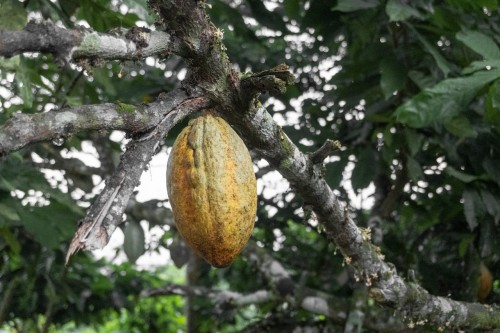
Living in the mountains of Matagalpa, it feels almost absurd: you are surrounded by cacao plantations that ship beans to chocolate makers all over the world, yet it is surprisingly hard and expensive to buy good cacao for daily use.
Nicaragua produces roughly 6,000–7,000 metric tons of cacao per year and is now the largest cocoa producer in Central America, though cacao is still tiny compared with coffee in economic terms. The main producing regions include Matagalpa, Jinotega, Rivas, the Caribbean regions and Río San Juan, with some municipalities like Waslala responsible for nearly half of the country’s output.
Despite this modest volume, a very high share of Nicaraguan cacao is classified as “fine flavor” (around 80%), which is exactly the niche that specialty chocolate makers in Europe and North America are hungry for.
Forecasts suggest Nicaragua could reach around 25,000 tonnes of cacao by 2026, with roughly 80% destined for export, reinforcing the logic that the best beans go overseas. In 2024, exports of cocoa and cocoa preparations brought in about 15 million US dollars, and raw beans alone were worth around 7–8 million in 2023.
Why Chocolate Is Scarce And Expensive Locally
Walk into a typical shop in Matagalpa or other highland towns and you quickly notice: there may be some industrial “chocolate-style” candy bars, but real high-cacao content chocolate is rare and often incredibly pricey. Local data show that most high‑quality fermented beans are purchased under export contracts, with only the balance going to the small national chocolate industry. When 70% of cacao exports head to Central American buyers and about 25% to Europe, there is simply not much left to transform into affordable, high‑percentage bars for Nicaraguan consumers.
The few artisanal manufacturers that do operate tend to work on a small scale and often market their bars as premium, tourist- or export‑oriented products, which drives up the final retail price. For a carefully wrapped 70–80% cacao bar of only 80 g, a price around 5 US dollars is not unusual by local standards, because these producers face high costs for packaging, certification, electricity, and sometimes imported ingredients, while selling into a domestic market with very limited purchasing power. The result is that only higher‑income locals and foreigners can regularly afford these products; everyday Nicaraguans stick to cheaper sweets or traditional drinks made with lower-grade cacao or sugar.
The Expat Paradox: Living In Cacao Country Without Cacao
For an expat who moved to the Nicaraguan mountains partly for the climate, nature and access to local crops, this situation feels like a paradox. From your house you might see cacao trees growing on nearby slopes, watch trucks loaded with sacks of fermented beans heading out, and still not find simple, affordable, minimally processed cacao in the supermarket. Unlike fruits or basic staples sold in the market, fine cacao is integrated into export value chains that barely intersect with local retail, so being “close to the source” does not automatically mean direct access.
At the same time, many local families do not have the disposable income to buy 80 g of artisan chocolate for the equivalent of several meals, so there is little mass demand that would push for a broader, mid‑priced cacao product line. The mountainous departments of Matagalpa and Jinotega remain some of the main cacao and coffee zones, but their economies are structured around selling raw or semi‑processed products to outside buyers, not satisfying sophisticated local consumption.
Health Benefits: Why You Want Cacao In Your Diet
There are good reasons to want regular access to cacao that go beyond taste. Cacao is rich in polyphenols, especially flavanols like epicatechin, which have strong antioxidant and vasodilating properties. These compounds can improve blood flow by stimulating nitric‑oxide–mediated relaxation of blood vessels and have been linked to cardiovascular benefits such as reduced blood pressure and better endothelial function.
Several clinical and experimental studies have looked at cacao’s effects on the eyes and visual system. Flavanol‑rich dark chocolate has been shown in small trials to improve visual contrast sensitivity and some aspects of retinal blood flow shortly after consumption, likely by enhancing perfusion of the retina and visual pathways.
A 2024 study reported that dark chocolate containing high levels of cocoa flavonoids improved retinal vessel functionality, suggesting better microcirculation in the eye. Together, these findings support the idea that regular intake of high‑cacao products may support eye health indirectly through improved blood flow and antioxidant protection.
Raw And Fermented Beans: A Cheap, Powerful Workaround
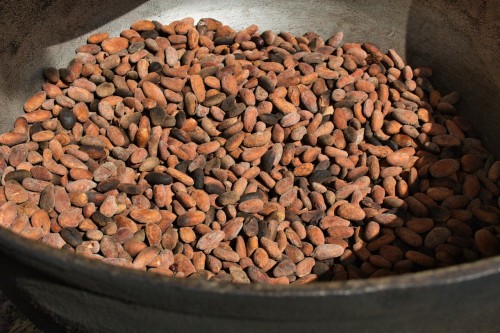
Given the price of finished chocolate bars, one practical workaround in Nicaragua is to skip the factory and buy the beans. In many herb and spice shops or small agro‑stores, you can find bags of fermented cacao beans for a fraction of the cost of branded chocolate—around four dollars per pound is a typical range. The flavor will vary from batch to batch depending on how long and how carefully they were fermented, but a mix of bitterness, fruitiness and slight acidity is normal.
From a nutritional perspective, eating beans that are only fermented and dried—and not heavily roasted or alkalized—helps preserve a large share of their original polyphenol content. Studies comparing unroasted and roasted beans show significantly higher total polyphenol levels in unroasted cocoa, with antioxidant capacity declining as processing steps accumulate. Research on fermentation intensity confirms that antioxidant capacity decreases as fermentation progresses over several days, though even fully fermented beans still retain high levels of bioactive compounds.
Skin Or No Skin? Texture, Taste And Nutrients
Eating fermented beans “as is,” including the skin, may sound rustic, but it is surprisingly effective. The outer shell adds crunch and extra fiber, and like many plant skins, it contains polyphenols and other phytochemicals that are often lost when processors remove it. Peeling the beans produces a smoother, more “chocolatey” texture in the nibs and removes some of the bitterness, but this is time‑consuming and discards part of the material that contributes to the overall antioxidant load.
Chemical analyses show that whole cocoa beans, whether roasted or unroasted, have strong radical‑scavenging capacity, and there is a positive correlation between total polyphenol content and antioxidant activity. Since both roasting and further processing into chocolate tend to reduce measurable polyphenols compared with the original bean, there is a good argument that nibbling on minimally processed beans gives you more of the compounds associated with vascular and eye benefits per gram. For someone living in Matagalpa on a budget, eating fermented beans with the skin becomes a very cost‑efficient way to tap into cacao’s health potential without paying luxury‑bar prices.
The reality remains: Nicaragua sends most of its best cacao abroad, boutique chocolate stays a luxury item, and the smartest way to eat cacao daily in the mountains is to go straight to the source—those rough, fermented beans in a sack at the spice shop. It may not look as glamorous as a designer bar in a foil wrapper, but in terms of antioxidants, flavanols and price per gram, the humble bean is hard to beat.