Should You Cancel Your Move to Nicaragua Because of US Pressure?
As an expat approaching five years in Nicaragua, this question has weighed heavily on my mind. When you build a new life somewhere — investing time, money, and relationships — the prospect of geopolitical upheaval is genuinely concerning. Moving countries is not like switching apartments; it's a complete reinvention of your life.
The short answer: Nicaragua still has a bright medium-term future for expats.
However, potential US influence could diminish the positive atmosphere over the long term, possibly transforming Nicaragua into something resembling Costa Rica — a country that has become significantly more expensive and dangerous over the past decade, leaving many expats questioning whether it's still worthwhile.
Let's examine the current situation and then explore a realistic worst-case scenario.
Nicaragua: The Safest Country in Central America
Nicaragua consistently ranks as the safest country in Central America by most metrics. According to 2025 data, Nicaragua's theft rate is less than one-quarter of the global average and one-third the rate of Costa Rica. The homicide rate of approximately 6.2 per 100,000 is lower than half of all US states, including California, Colorado, Nevada, and North Carolina.
Key safety statistics:
- Costa Rica's homicide rate is nearly 3x higher than Nicaragua's
- Panama's homicide rate is double Nicaragua's
- Mexico's homicide rate is nearly 5x higher
Nicaragua does not have widespread cartel violence or organized crime issues common elsewhere in the region
The Numbeo Crime Index for 2025 shows Nicaragua with a crime index of 50.8, compared to Costa Rica at 54.1, Guatemala at 57.7, and Honduras at 72.0.
El Salvador: A Close Competitor but Different
El Salvador has made remarkable security improvements under President Bukele's policies. In April 2025, the US Department of State upgraded El Salvador to Level 1: Exercise Normal Precautions — the safest travel advisory level — recognizing the country's dramatic drop in gang activity. The 2023 homicide rate dropped to a historic low of just 2.4 per 100,000 inhabitants.
However, Nicaragua offers advantages El Salvador cannot match:
- Ability to live in mid-sized towns among locals without issues in non-touristy areas
- Choice between expat bubbles or local integration — you can pay premium prices in expat communities or live affordably among Nicaraguans as a normal resident
- Greater geographic diversity — from Pacific beaches to colonial cities to highland communities
- Less authoritarian security approach — while effective, Bukele's state of emergency has suspended certain constitutional rights
Costa Rica: A Cautionary Tale
Costa Rica was once Central America's gold standard for expats and tourists. That reputation is rapidly eroding. In 2023, Costa Rica's homicide rate surged to 17.2 per 100,000 — a 38% increase from 2022 — driven by clashes between local gangs linked to Mexican, Colombian, and Venezuelan cartels.
The deterioration is staggering:
- Criminal organizations in Costa Rica have grown from 35 to 340 over the past decade
- Costa Rica surpassed 3,000 total homicides under President Chaves as of late 2025
- In 2025, the country averaged approximately 2.4 killings per day
- The homicide rate now stands near 17 per 100,000, ranking Costa Rica high in Latin America
- Violence has expanded beyond drug-related homicides to include rising rates of robbery, femicides, and contract killings
This transformation from "the Switzerland of Central America" to a nation grappling with cartel violence demonstrates how quickly conditions can change — and why Nicaragua's current stability should not be taken for granted.
Nicaragua's Economic Resilience and Food Sovereignty
One of Nicaragua's greatest strengths is its remarkable food sovereignty — over 90% of basic food needs are produced domestically. In the event of an international crisis, the country could sustain itself far better than neighbors dependent on imports.
The government's 2025-2026 production and consumption plan prioritizes:
- Food security and healthy food access
- Strengthening family farming
- Animal and plant health
- Entrepreneurship and local trade
- Climate change protection through soil conservation and reforestation
Nicaragua possesses the largest freshwater reservoir in Central America, and while water isn't abundant, it's not scarce either — people are accustomed to intermittent supply systems that work well enough.
Many industries remain low-tech and aren't dependent on critical spare parts from abroad, providing insulation from global supply chain disruptions.
Inflation, Currency, and Economic Stability
Nicaragua has demonstrated solid economic fundamentals despite external pressures:
- GDP growth projected at 3.0-4.0% for 2025, with unemployment stable at 3.0-3.5%
- Inflation projected between 2.0-4.0%, aligning with regional peers like Guatemala and Honduras
- Public debt has fallen to 45% of GDP — relatively low for the region
- Foreign reserves cover seven months of imports, providing a buffer against external shocks
- Current account surplus of 3.0-4.0% of GDP expected
The Nicaraguan córdoba is tied to the US dollar, and the government subsidizes major supplies like fuel and basic food to prevent price shocks. While Nicaraguans feel inflation more acutely due to lower local incomes, expats earning foreign income find price levels among the most affordable in Central America relative to the high standard of living.
The China Free Trade Agreement: Expanding Options
The Free Trade Agreement between Nicaragua and China came into effect on January 1, 2024, representing a significant economic diversification. This agreement:
- Frees up 71% of Nicaraguan products exported to China from tariffs
- Enables over 95% of all traded goods to see tariffs gradually eliminated
- Brings more daily consumer products into the country, improving variety
Cost of Living: Still Among the Most Affordable
While luxury food items remain expensive with limited selection, those preferring a healthy lifestyle with home-cooked meals benefit enormously from low prices for vegetables, fruits, rice, beans, and basic ingredients. The food supply chain is highly decentralized — not controlled by large corporations — meaning vendors are often just 100 meters from your house, with mobile cart vendors delivering directly to neighborhoods.
Nicaragua remains one of the most affordable places to live in Central America with a high quality of life. According to 2025 estimates for San Juan del Sur (a popular expat destination):
- Monthly Cost
- Single adult (owns property) $1,200+
- Couple $1,500–$2,500+
- Family of four $2,500–$5,000+
- Housing
- Basic one-bedroom (downtown) $400–$500
- One-bedroom outside town $250–$625
- Upscale 3-bedroom with pool $1,200–$1,800
- Typical grocery budget (adult) ~$300–$400/month
Overall, the cost of living in Nicaragua is approximately 50% lower than in the United States. Those who live like locals — shopping at markets, using public transport, and keeping things simple — can live well for under $1,500 per month.
Current US Pressure: What's Actually Happening
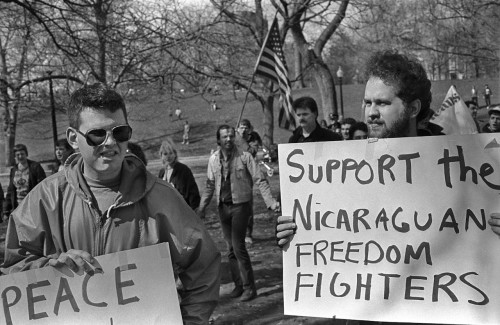
The United States has stepped up pressure on Nicaragua through a mix of tariffs and targeted sanctions. Effective January 1, 2026, the US will implement phased Section 301 tariffs on all Nicaraguan goods that do not qualify under CAFTA‑DR, starting at 0% in 2026 and rising to 10% in 2027 and 15% in 2028, on top of existing tariffs. These measures are justified by Washington as a response to alleged labor rights abuses, human rights violations, and the dismantling of the rule of law.
In parallel, USTR is considering more aggressive steps: suspending some or all CAFTA‑DR benefits for Nicaragua and imposing tariffs of up to 100% on some or all Nicaraguan imports, potentially phased in over up to 12 months. These options are under review, with public comments invited and legal and political constraints—especially the need for regional consensus—still in play.
On the sanctions side, Executive Order 14088 (October 2022) significantly expands the Nicaragua sanctions program by identifying the gold sector as a priority target. It prohibits new US investment in that sector and authorizes restrictions on imports of certain Nicaraguan gold products and exports of certain goods from the US to Nicaragua, which has already led to sanctions on key mining entities and the country’s General Directorate of Mines.
Importantly, there are no UN sanctions on Nicaragua, and European and UK measures remain targeted at specific individuals and entities through travel bans and asset freezes rather than broad, economy‑wide trade sanctions.
Worst-Case Scenario: What If the US Forces "Regime Change"?
Geopolitical analysts who have commented on developments in Venezuela, Cuba, and Colombia suggest the US is generally not interested in completely destroying countries in its backyard. The reasoning includes:
- Avoiding refugee backlash from destabilized neighbors
- Preventing collapse that would hinder developing these countries as new markets
- Protecting financial interests and ensuring smooth transitions rather than uncontrolled chaos
- Resource extraction interests that require functional economies
The January 2026 events in Venezuela — where US airstrikes deposed President Maduro — demonstrate that Washington is willing to take dramatic action, but this was preceded by years of escalating pressure rather than sudden destruction.
What a Gradual Transition Might Look Like
If US influence increases in Nicaragua, probable effects would include:
- Higher inflation due to privatizations and requirements to purchase from American suppliers
- Reduced subsidies on fuel and basic goods
- Weakened workers' rights and social protections
- Increased poverty and crime as people struggle with higher costs
- Drug trafficking expansion as seen in other US-influenced regional countries
This trajectory mirrors what happened in Costa Rica over the past decade — a country that went from being the safest in Central America to experiencing a 38% surge in homicides and a tenfold increase in criminal organizations.
Timeline Considerations and Mitigation Strategies
Even in a worst-case scenario, these changes would likely unfold over several years, not overnight. During any transition period:
- Living among Nicaraguans in integrated communities would remain possible initially
- If local areas became too dangerous, moving to gated communities would increase costs but still allow residency
- The fundamental advantages — climate, natural beauty, geography — would remain unchanged
- Prices would rise and positive social vibes would likely diminish, but livability would persist
Lessons from 2018: The Real Risk
The 2018 protests and political crisis devastated Nicaragua financially and emotionally, driving investors away and causing the economy to shrink nearly 6% that year. Foreign investment declined 90% between the first and second halves of 2018, and approximately 417,000 people lost their jobs.
The tourism industry was decimated, and before protests began, the economy had been projected to grow 4.3%. This demonstrates that internal instability poses a more immediate threat than gradual US pressure.
No one can predict whether another 2018-style crisis will occur, but this remains the wildcard scenario that would most rapidly change conditions for expats.
The Bottom Line: Planning Ahead
Even considering worst-case scenarios, Nicaragua appears viable for expats planning at least several years ahead. The country offers:
- The safest environment in Central America currently
- Exceptional food sovereignty and economic resilience
- Low cost of living with high quality of life
- Stable currency and moderate inflation
- Diversifying trade relationships reducing dependency on the US
The comparison with Costa Rica is instructive: even a country that has experienced significant deterioration remains inhabited by expats who simply adjusted their lifestyles and locations.
Nicaragua, starting from a stronger safety position, has considerable room before reaching Costa Rica's current state.
For those serious about building a new life abroad, Nicaragua offers a compelling combination of affordability, safety, and natural beauty that few places can match. The geopolitical situation warrants monitoring, but shouldn't necessarily derail well-considered migration plans. Time will tell how events unfold, but the medium-term outlook remains positive for those willing to adapt to changing circumstances.