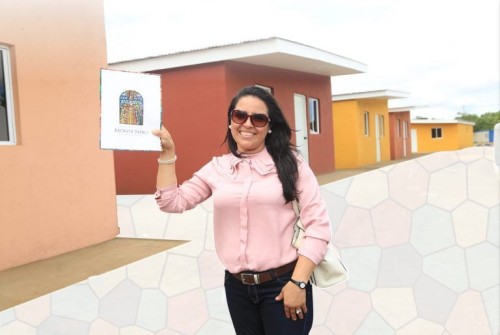
The New Century “Mini-Cities” of Nicaragua
New Century is a Nicaraguan developer focused on large, gated-style residential “mini cities” around Managua, offering small concrete homes at relatively low entry prices, often with mortgage-style payment plans rather than cash-only sales.
New Century: developer profile
New Century is a construction and development company active in Nicaragua for more than 20 years and now present in several American countries. It specializes in mass-scale residential projects built with a monolithic concrete system (Blok-On) and marketed as safe, organized communities for families. Across its different projects, the company reports having delivered around 5,000 homes, with thousands more under construction as of 2024–2025.
Main residential projects and locations
New Century’s core residential developments are concentrated in and around Managua, with expansion into other cities such as Granada.
Ciudad El Doral
A large residential development near Managua, presented as one of the company’s flagship projects. It is promoted as a modern, secure residential zone with urban planning aimed at family life, though public sources provide limited detail on its exact kilometer marker.
Ciudad Campuzano
A new “city” of around 3,000 homes under construction, using the Blok-On concrete system and offering four housing models. It is located at km 26 on the Nindirí–Sabana Grande road in the Managua–Masaya corridor, in a peri-urban environment marketed as fresher and quieter than the dense urban core.
Residencial Monte Nebo
A 310-lot project located south of Managua’s international airport, implemented as an accessible public–private housing effort. Official figures place the home price around 10,500 USD, with payment plans advertised from approximately 60 USD per month, supported by a 500 USD contribution and a 2,000 USD state housing bonus.
Other developments (Gran Sultana and apartments)
Corporate material also refers to:
- A 533-home project in the “Gran Sultana,” the traditional nickname for Granada, including several house models tailored to that city.
- Projects with house models between about 40 and 80 m², and another with 331 units of around 56 m², likely in different parts of the Managua area.
- An apartment complex of about 204 units in a high-value urban area, equipped with modern finishes.
- A cargo-terminal–type complex with accommodation and services near an international transit hub.
Overall, New Century’s residential footprint is concentrated in the broader Managua metropolitan region (including the airport and Managua–Masaya axis), with at least one project in Granada.
Gated “mini towns” and lifestyle
These developments are part of a broader Nicaraguan trend towards gated and semi-gated communities serving different income levels. In and around Managua, observers have counted dozens of such residentials and condo projects, ranging from low-cost to luxury.
New Century’s projects fit into this pattern as planned residential complexes with:
- Perimeter demarcation and controlled access.
- Internal street networks and lighting.
- Shared green or recreational areas.
- Standardized concrete housing units.
They function as “mini towns” to the extent that concentration of residents tends to attract small-scale commerce and services, such as neighborhood shops, churches, and schools.
House prices and scale
Published project prices
Publicly available information points to entry-level prices significantly below typical urban standalone homes in many cases:
- Ciudad Campuzano: home models promoted from about 22,999 USD for small concrete units, with a total of roughly 3,000 houses planned.
- Residencial Monte Nebo: prices around 10,500 USD per home, supported by government housing incentives and low monthly payments from roughly 60 USD.
- Other New Century projects: corporate descriptions mention models from about 20,999 USD for compact homes in the 40–80 m² range.
These figures position New Century’s residential offerings in the affordable and lower-middle-income segment, emphasizing small but solid concrete structures combined with subsidized or accessible financing.
Reference: other gated developments
To illustrate price variation in gated or semi-gated residentials, one listing in “Residencial camino a Nuevo Milenio” (a different project in Ciudad Managua) offers a house for approximately 80,000 USD, with about 150 m² of construction and a 523 m² lot. This example shows how homes in planned residentials can span a wide price range depending on location, lot size, and whether the sale is developer-direct or on the secondary market.
Pros and cons of living in Nicaraguan gated communities
Advantages
Security and controlled access
Gated communities are designed with perimeter fencing, guard posts, and entry control that tend to reduce opportunistic crime compared to many open neighborhoods in Managua. This is particularly relevant for residents with valuable equipment at home or for those who are frequently away.
Infrastructure and urban order
Developers typically provide paved internal streets, drainage, public lighting, and designated green areas from the outset. This level of planned infrastructure can surpass that found in older or informal urban areas.
Quieter environment
Many projects are located in peri-urban zones with lower population density, marketed as fresher and quieter than central barrios. Daily life inside these developments tends to feature fewer passing vehicles, street vendors, and spontaneous street activity.
Accessible financing and lower entry barrier
Public–private housing schemes and state bonuses allow developers to advertise low monthly payments and relatively small down payments. This can make formal homeownership accessible to households that would struggle to acquire a standalone property in a traditional urban neighborhood.
Emergence of local services
As population density within a development increases, small shops, churches, schools, and other services often follow. Over time, this can create a self-contained environment where daily needs are met close to home.
Disadvantages
Spatial and social separation
Residents may experience a certain degree of separation from surrounding towns and barrios, both physically and socially. This can slow integration into broader local networks and everyday street-level life.
Rules and limited flexibility
Many developments impose regulations concerning construction modifications, facades, noise, pets, and informal businesses to preserve order and aesthetics. These rules can limit the degree of customization and the ability to use the property for non-residential activities.
Compact house and lot sizes
Entry-level homes are typically compact, with floor areas often in the 40–60 m² range and relatively small plots. This can be restrictive for residents who desire large gardens, workshops, or more expansive outdoor spaces.
Dependence on management quality
Long-term security, maintenance, and enforcement of regulations depend heavily on the developer and subsequent homeowners’ association or management bodies. If management weakens, common areas and security can deteriorate over time.
Peri-urban distance and transport needs
Many developments lie several kilometers from city centers, requiring reliance on public transport, private vehicles, or taxis for access to employment, healthcare, and major commercial centers. This can increase both commuting time and transportation costs.
Summary
New Century’s mass-scale, gated residential projects in Nicaragua illustrate how planned “mini cities” can offer relatively affordable, concrete housing with enhanced security and basic urban infrastructure, especially in the Managua region. These developments provide quieter environments, controlled access, and potential access to subsidized financing, but they also involve compact homes, peri-urban locations, and rules that limit flexibility, as well as a degree of social separation from traditional barrios.
You can find the different projects on the website of New Century