TLDR:
Nicaragua’s May 2026 decree allows temporary entry of foreign military forces—including Russia, the U.S., China, and regional partners—for training, humanitarian missions, and security cooperation. While highlighting ongoing Russia-Nicaragua ties, the move follows a regular pattern and reflects a broader strategy of maintaining diverse international partnerships rather than signaling escalation.
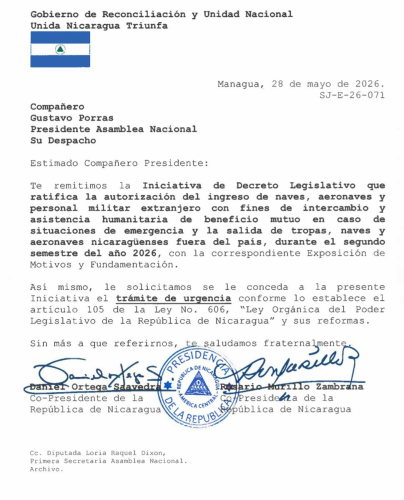
Emergency Decree Opens Military Access
On May 29, 2026, Nicaragua published Presidential Decree No. 05-2026 in its official gazette, La Gaceta, authorizing the temporary entry of foreign military personnel, ships, and aircraft for the second half of the year. The National Assembly approved the measure the same day.
The authorization covers the period from July 1 to December 31, 2026, and includes multiple partner countries such as Russia, China, the United States, Cuba, Venezuela, Mexico, and several Central American nations. The decree frames these activities as part of humanitarian cooperation, emergency response, search and rescue, and mutual assistance efforts.
Scope of Foreign Military Participation
Russia plays a central role under the decree, with up to 230 rotating personnel allowed to enter Nicaragua alongside ships, aircraft, and military equipment. Their activities include joint training with Nicaraguan special forces, as well as cooperation with naval and air units. Additional areas of focus include humanitarian rescue operations and efforts to combat transnational crime and drug trafficking.
Other countries are also included under defined limits: Venezuela may send around 180 personnel, while Cuba and Mexico are each authorized up to 50. The United States is permitted limited participation, primarily for humanitarian operations and access to ports and airports. Regional partners within the CFAC framework—Guatemala, El Salvador, Honduras, and the Dominican Republic—are also part of the arrangement.
Reciprocal Military Exchanges
The decree is not one-sided. Nicaragua will also send its own personnel abroad for training and cooperation, including deployments of approximately 50 personnel each to Russia and Mexico, along with additional exchanges with other partner nations.
This reciprocal structure reinforces the collaborative nature of the agreement, focusing on shared training, knowledge exchange, and coordinated responses to regional challenges.
Long-Term Russia–Nicaragua Agreement
The decree builds on a broader military cooperation agreement signed between Russia and Nicaragua on September 22, 2025, in Moscow. This agreement was ratified by Russia’s Federation Council and approved by President Vladimir Putin in late April and early May 2026.
The framework establishes long-term cooperation in areas such as joint military training, counterterrorism, anti-piracy efforts, and military education. It also promotes collaboration in military science and strategic coordination on regional and global security issues.
The agreement is set for a five-year term with automatic renewal and includes specific legal protections for Russian personnel operating in Nicaragua. It complements existing cooperation, including equipment transfers, training programs, and infrastructure such as the GLONASS satellite station.
Continuity Rather Than Escalation
While the decree may draw attention internationally, it follows a well-established pattern. Nicaragua has issued similar authorizations regularly since the 2010s, allowing rotating foreign military presence for training and humanitarian purposes.
Rather than signaling a sudden escalation, the measure serves as a routine administrative step that maintains ongoing partnerships and operational readiness.
Strategic Implications
For Russia, the arrangement ensures a continued foothold in Central America through relatively low-cost engagement, training missions, and symbolic presence. For Nicaragua, it reflects a strategy of diversifying international security partnerships while maintaining flexibility in global alignments.
The inclusion of multiple countries—including limited participation from the United States—suggests a balanced approach rather than exclusive alignment with any single power.
Regional Outlook
Such military cooperation carries broader implications for Central America and U.S.-Latin America relations. However, long-term regional stability depends not only on security arrangements but also on economic development, governance, and resilience to natural disasters.
For Nicaragua, the practical benefits of these partnerships—particularly in disaster response and humanitarian coordination—may prove most significant, provided they align with national sovereignty and domestic priorities.
Related articles:
Nicaragua’s Russia Military Pact: What It Really Means for Expats
U.S. National Emergency Over Nicaragua Explained: Sanctions and 2018 Move
The Donroe Doctrine: Old Hegemony in New Packaging
Current U.S. Pressure on Nicaragua: Recent Diplomatic Moves